In cross-section
How they are built
Engineered hardwood is real wood that may be refinishable and adds resale value. Laminate is a photograph under a very hard wear layer, costs roughly half, and resists scratches better. If refinishing and resale matter, pay for engineered; otherwise laminate is honest value.
Installed cost includes material and professional labor. Ratings are relative across all 18 materials on this site, not absolute scores.
| Engineered Hardwood | Laminate | |
|---|---|---|
| Installed cost per sq ft | $7.00–$19.00 | $3.50–$9.00 |
| Expected service life | 20–50 years | 15–25 years |
| Cost per sq ft per year | $0.37 | $0.31 |
| Durability | 4/5 | 4/5 |
| Water resistance | 2/5 | 2/5 |
| Comfort underfoot | 3/5 | 2/5 |
| Sound absorption | 3/5 | 2/5 |
| Ease of maintenance | 3/5 | 4/5 |
| DIY friendliness | 3/5 | 5/5 |
| Environmental profile | 4/5 | 3/5 |
| Traffic rating | Heavy | Heavy |
| Commercially rated | Yes | Yes |
The points that decide this in practice — not the spec sheet items that read well but rarely change anyone's mind.
Laminate wear layers are aluminum-oxide melamine and are harder than any wood finish, so day to day laminate shows fewer scratches. But engineered has a genuine wood veneer that can be refinished if thick enough, and it is wood underfoot and to the eye. Harder surface versus repairable surface — the same trade as hardwood against laminate, at a narrower price gap.
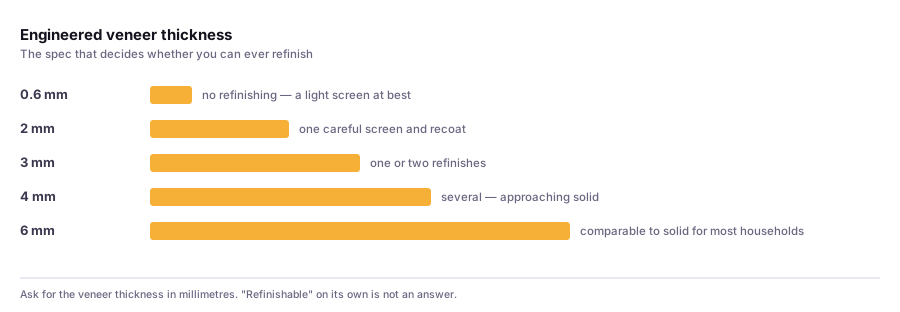
A 4 to 6mm veneer gives you a refinishable floor that will outlive any laminate. A 0.6mm veneer gives you the appearance of wood with none of the longevity, and against a good AC4 laminate it is arguably the worse buy at a higher price. This single spec determines whether the premium is worth paying.
Engineered handles humidity swings well because of its cross-ply construction, though standing water still damages it. Laminate has a fiberboard core that swells irreversibly once water reaches a seam. Neither belongs in a bathroom, but engineered is the more forgiving of the two in a kitchen.
Entry-level engineered with a thin veneer now overlaps premium laminate in price. At that intersection, the laminate is often the better-performing product. Compare specific products rather than categories — the category names disguise a very wide quality range on both sides.
$7.00–$19.00 per sq ft installed, lasting 20–50 years — about $0.37 per sq ft per year.
Ignore the price tag and read the wear-layer spec. Two floors at the same price can differ by 25 years of service life.
$3.50–$9.00 per sq ft installed, lasting 15–25 years — about $0.31 per sq ft per year.
If a salesperson tells you laminate is waterproof, they mean the plank surface. The core and the seams are the failure point — that is what SPC vinyl solves.
It is real wood, can be refinished if the veneer is thick enough, and carries better resale perception. Laminate has a harder, more scratch-resistant surface and costs less. A thick-veneer engineered floor is clearly better; a paper-thin veneer engineered floor is arguably worse than good laminate at a higher price.
Often yes, by touch and by looking at the edges and repeat pattern. Laminate repeats its printed design every few planks, and the surface texture rarely aligns with the printed grain. Engineered has genuine wood grain with natural variation. Good laminate fools the eye at a glance but rarely at close range.
Neither is ideal, but engineered handles humidity better and can often be dried and refinished after a spill, whereas laminate swells permanently once water reaches the core. If the kitchen sees real water risk, vinyl plank or tile is the sounder choice than either.
Buy LVP if the room will ever see standing water. Buy laminate if you want the most convincing wood look and the room…
Both are real wood on the surface. Solid gives you the most refinishes and the longest life, but only over a wood…
Engineered hardwood is real wood that can be refinished and adds resale value. LVP is waterproof, cheaper and more…
Hardwood is a multi-decade floor that can be refinished and adds resale value. Laminate is a wear-layer product at a…