In cross-section
How they are built
Buy LVP if the room will ever see standing water. Buy laminate if you want the most convincing wood look and the room stays dry. Laminate has the harder, more scratch-resistant surface; LVP is the one that survives a dishwasher leak.
Installed cost includes material and professional labor. Ratings are relative across all 18 materials on this site, not absolute scores.
| Luxury Vinyl Plank — SPC (Rigid Core) | Laminate | |
|---|---|---|
| Installed cost per sq ft | $4.00–$11.00 | $3.50–$9.00 |
| Expected service life | 15–25 years | 15–25 years |
| Cost per sq ft per year | $0.38 | $0.31 |
| Durability | 4/5 | 4/5 |
| Water resistance | 5/5 | 2/5 |
| Comfort underfoot | 2/5 | 2/5 |
| Sound absorption | 3/5 | 2/5 |
| Ease of maintenance | 5/5 | 4/5 |
| DIY friendliness | 5/5 | 5/5 |
| Environmental profile | 2/5 | 3/5 |
| Traffic rating | Extreme | Heavy |
| Commercially rated | Yes | Yes |
The points that decide this in practice — not the spec sheet items that read well but rarely change anyone's mind.
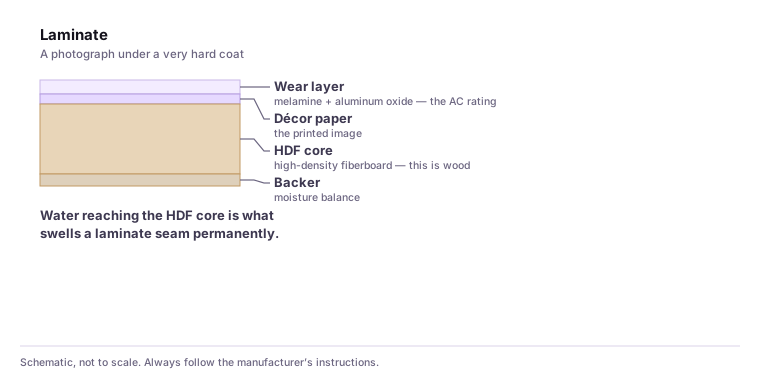
LVP is vinyl all the way through. Submerge it, dry it, reinstall it — the plank itself is unchanged. Laminate has a high-density fiberboard core, which is wood. Modern laminates carry water-resistant surface treatments and tighter joints, and many are warranted against surface spills for 24 to 72 hours, but that is a spill warranty, not a flood warranty. Once water reaches the core through a seam, the board swells and the edge never goes back down. That is the single decision point, and everything else is secondary.
This surprises people who assume the more expensive-sounding product wins everywhere. Laminate wear layers are aluminum-oxide-impregnated melamine and are genuinely hard — they resist scuffing, chair scrapes and grit better than vinyl. LVP has a softer surface that dents under point loads: a dropped can, a piano leg, a stiletto heel. If you are hard on floors mechanically but not with water, laminate is the tougher product.
SPC has a stone-plastic composite core and is dense, thin and hard — it telegraphs subfloor imperfections and sounds hollow without good underlayment. Laminate over a quality pad feels warmer and quieter. Neither feels like wood, but laminate usually feels less like plastic. If acoustics matter, budget for the underlayment rather than assuming either one solves it.
Be honest with yourself here. Both are wear layers over a core; neither refinishes, and both get replaced rather than restored. Appraisers do not treat either as a hardwood equivalent. If the resale conversation matters more than the budget, the comparison you actually want is engineered hardwood, not these two.
$4.00–$11.00 per sq ft installed, lasting 15–25 years — about $0.38 per sq ft per year.
Wear layer is the whole ballgame. 12 mil minimum for a family home, 20 mil for anything commercial. Below 8 mil is a rental-grade product.
$3.50–$9.00 per sq ft installed, lasting 15–25 years — about $0.31 per sq ft per year.
If a salesperson tells you laminate is waterproof, they mean the plank surface. The core and the seams are the failure point — that is what SPC vinyl solves.
Neither is better across the board. LVP is fully waterproof and better for kitchens, baths, basements and slabs. Laminate has a harder surface that resists scratches and scuffs better, usually prints a more convincing wood grain, and often feels warmer underfoot. Choose on moisture exposure first, then surface hardness.
Surface spills are fine if wiped up reasonably promptly, and many current products are warranted for 24 to 72 hours of surface exposure. What laminate cannot survive is water reaching the fiberboard core through a seam or edge — that causes swelling that does not reverse. Steam mops are the most common way people destroy laminate, because they force hot moisture straight through the joints.
In a dry room, similar — both are wear-layer products that get replaced rather than refinished. In a wet room, LVP lasts indefinitely and laminate can fail in a single incident. The variable that matters most within each category is wear layer thickness on LVP and AC rating on laminate; a thin-wear-layer LVP will not outlast a good AC4 laminate.
Engineered hardwood is real wood that can be refinished and adds resale value. LVP is waterproof, cheaper and more…
This is usually a room-by-room decision, not a whole-house one. LVP wins on cleaning, water, pets and resale. Carpet…
SPC is denser and harder, so it dents less and hides subfloor flaws worse. WPC is thicker and softer, so it feels warmer…
Hardwood is a multi-decade floor that can be refinished and adds resale value. Laminate is a wear-layer product at a…
Sheet vinyl is the more genuinely waterproof installation because it has almost no seams. LVP looks far better, repairs…
Porcelain lasts decades and is effectively permanent; LVP is warmer, softer, quieter, cheaper to install and easier to…