In cross-section
How they are built
Porcelain is denser, absorbs almost no water, and is the right call for floors, wet areas and anywhere outdoors. Ceramic is easier to cut, cheaper, and perfectly good on walls and light-duty residential floors. The dividing line is a defined technical spec, not marketing.
Installed cost includes material and professional labor. Ratings are relative across all 18 materials on this site, not absolute scores.
| Porcelain Tile | Ceramic Tile | |
|---|---|---|
| Installed cost per sq ft | $8.00–$29.00 | $6.00–$18.00 |
| Expected service life | 50–100 years | 25–50 years |
| Cost per sq ft per year | $0.25 | $0.32 |
| Durability | 5/5 | 3/5 |
| Water resistance | 5/5 | 4/5 |
| Comfort underfoot | 1/5 | 1/5 |
| Sound absorption | 1/5 | 1/5 |
| Ease of maintenance | 4/5 | 4/5 |
| DIY friendliness | 2/5 | 3/5 |
| Environmental profile | 4/5 | 4/5 |
| Traffic rating | Extreme | Moderate |
| Commercially rated | Yes | No |
The points that decide this in practice — not the spec sheet items that read well but rarely change anyone's mind.
Under ANSI A137.1, porcelain is defined by water absorption of 0.5% or less, measured by ASTM C373. Ceramic absorbs more. That single property drives nearly everything else: freeze-thaw survival, stain resistance, density and strength. When a showroom tells you a tile is "porcelain-like," that means it is not porcelain. Ask for the absorption figure.
Through-body porcelain carries its color all the way through, so a chip is far less visible. Glazed ceramic has color only in the glaze over a lighter body, so a chip shows as a pale spot. On a floor that will take impacts — an entry, a kitchen, anywhere heavy things get dropped — through-body is worth the premium.
The softer body cuts more cleanly with a basic wet saw and is more forgiving around outlets and irregular walls. Porcelain, especially large-format and rectified, demands better blades, better substrate flatness and more skill. If you are doing the work yourself, that difficulty gap is a legitimate factor.
People assume porcelain is safer because it is denser. Slip resistance is a surface property, measured as DCOF under ANSI A326.3, and a polished porcelain can be far more slippery than a matte ceramic. For wet areas look for DCOF of 0.42 or greater, and treat that number as independent of the porcelain-versus-ceramic question entirely.
$8.00–$29.00 per sq ft installed, lasting 50–100 years — about $0.25 per sq ft per year.
The tile is rarely the expensive part. Substrate prep, uncoupling membrane and skilled labor are — and skimping on those is what causes the cracks people blame on the tile. On wood-look plank, put two more questions to any bid: what offset, and what grout joint. A 50% brick-set on a 48" plank with a 1/16" joint will generate lippage complaints no matter how good the tile is.
$6.00–$18.00 per sq ft installed, lasting 25–50 years — about $0.32 per sq ft per year.
If the space ever gets wet, freezes, or sees real traffic, the porcelain upgrade costs a little more in material and nothing extra in labor. Take it.
For floors, wet areas and exteriors, yes — porcelain absorbs 0.5% water or less, making it denser, stronger and freeze-thaw resistant. For walls, backsplashes and light-duty residential floors, ceramic performs perfectly well at lower cost and is easier to cut.
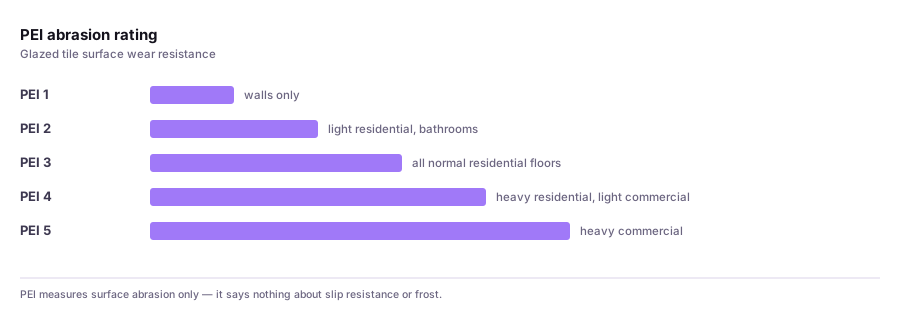
Yes, provided the PEI rating suits the traffic — PEI 3 or higher for normal residential floors, PEI 4 and up for heavy traffic or entries. What ceramic should not be used for is exterior application or anywhere subject to freezing, because its higher water absorption leads to freeze-thaw failure.
The reliable way is the spec sheet: water absorption of 0.5% or less means porcelain under ANSI A137.1. Visually, porcelain is often denser and heavier, and through-body porcelain shows the same color on an unglazed edge as on the face, whereas glazed ceramic reveals a lighter body beneath the glaze.
Porcelain lasts decades and is effectively permanent; LVP is warmer, softer, quieter, cheaper to install and easier to…
Porcelain is more durable, cheaper and nearly maintenance-free, and modern printing imitates stone convincingly. Natural…
Ceramic is cheaper, consistent and needs no sealing. Stone is unique, more expensive and requires ongoing maintenance.…